The next litter pick will be on Saturday 5th September 2026 at 10.00 . Meet at Dragonfly Bridge to the rear of Morrisons Supermarket, Woosehill RG41 3SN at 10:00.
Please wear suitable clothing, footwear and gloves.Litter pickers and bags provided. Parking is available at Morrisons.
WOOSEHILL MEADOWS & EMM BROOK WORK PARTY CALENDAR– 2026
AUGUST
Sat 1st - Litter Pick
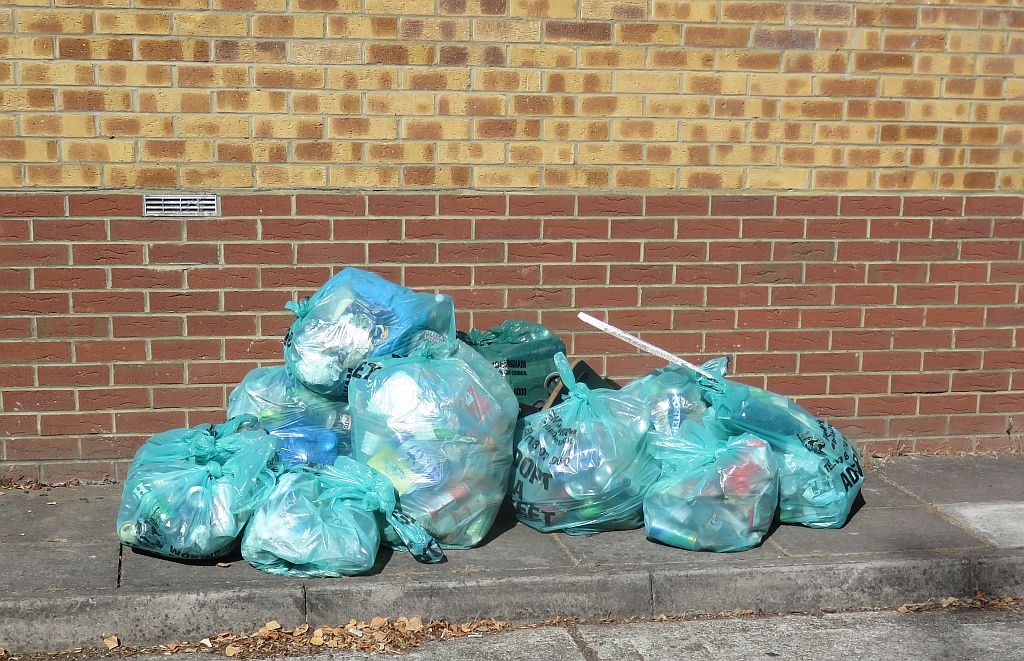
Despite the heat, the team picked up 11 bags of rubbish from alongside the Emm Brook.
Sat 15th - Work Party
Brush Clearing – Around the path along the stream.
Watering our tree saplings along the Emm Brook
Deadwood Pile & Dead Hedge Material preparation – Sorting cuttings and building stakes, weaving poles, and adding filling materials.
What to Bring:
* Sturdy footwear and working gloves are essential.
* If you have loppers, pruning saws, or shears, please bring them along!
* We’ll provide additional tools.
JULY
Sat 4th - FOTEB Litter Pick
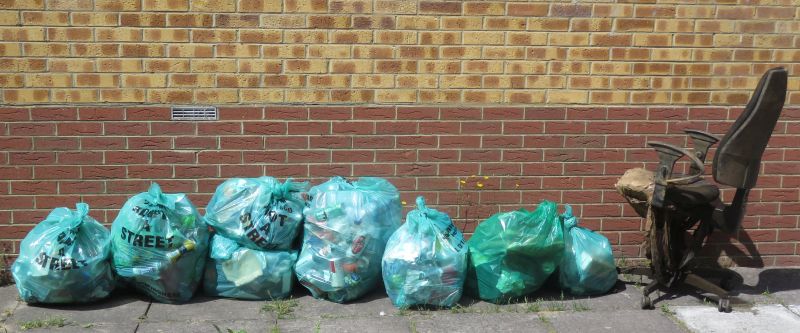
A big thanks to those that attended the FOTEB Monthly litter pick alongside the Emm Brook on Saturday . Thankfully it wasn't too hot. A total of 8 bags of rubbish and an Office chair out of the Emm Brook were removed.
Sat 18th - Work Party
- CANCELLED
FOTEB 2026 AGM
This years AGM was held upstairs at the Woosehill Community Centre ,Emmview Close RG41 3DA on Monday 11th May 2026 at 19:30 .
Following the AGM a talk was given by Matt Knight of Freely Fruity & Tree Council.
Entitled:
Roots of Change — How Trees, Schools & Communities Grow Together .
BALSAM BASHING 2026
The annual Balsam Bashing has been undertaken on the Emm Brook in August. Once the Balsam has come into flower.
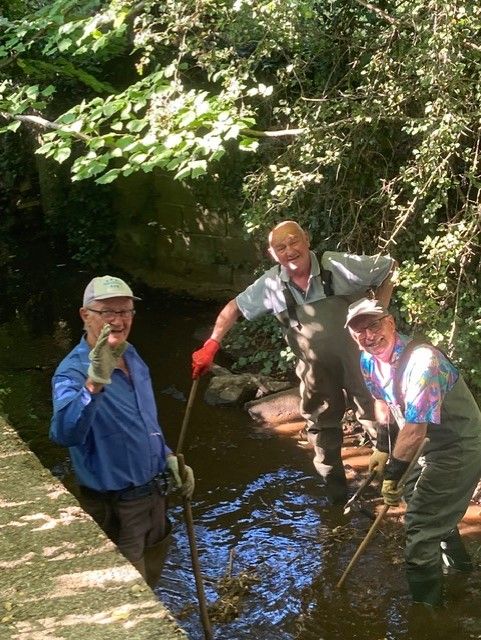
The Three Amigos will walk the Emm Brook from Area 2 to Area 8 removing Himalayan Balsam as they go in the summer, a total distance of approximately 3.53 km or for those of us of a certain age 2.19 Miles.
MONTHLY BIRD WALKS AROUND DINTON PASTURES 2026
RSPB
The RSPB group runs “A Date With Nature” walk at Dinton Pastures
Country Park on the first Saturday morning of every month of
the year. These start at 9:00 am in the main car park (postcode
RG10 0TH), and finish by 12:30 pm. A donation of £2 per adult
(children free) is requested.
Car park charges at weekends are currently £2.30/hr
up to a maximum of £9.20 (for 4 hours or over).
This
Month on the Emmbrook
What to look for if you are out and about in
SEPTEMBER
General
September is a time of
change as the tide turns from Summer to Autumn with the Autumnal equinox usually on the 23nd September. The
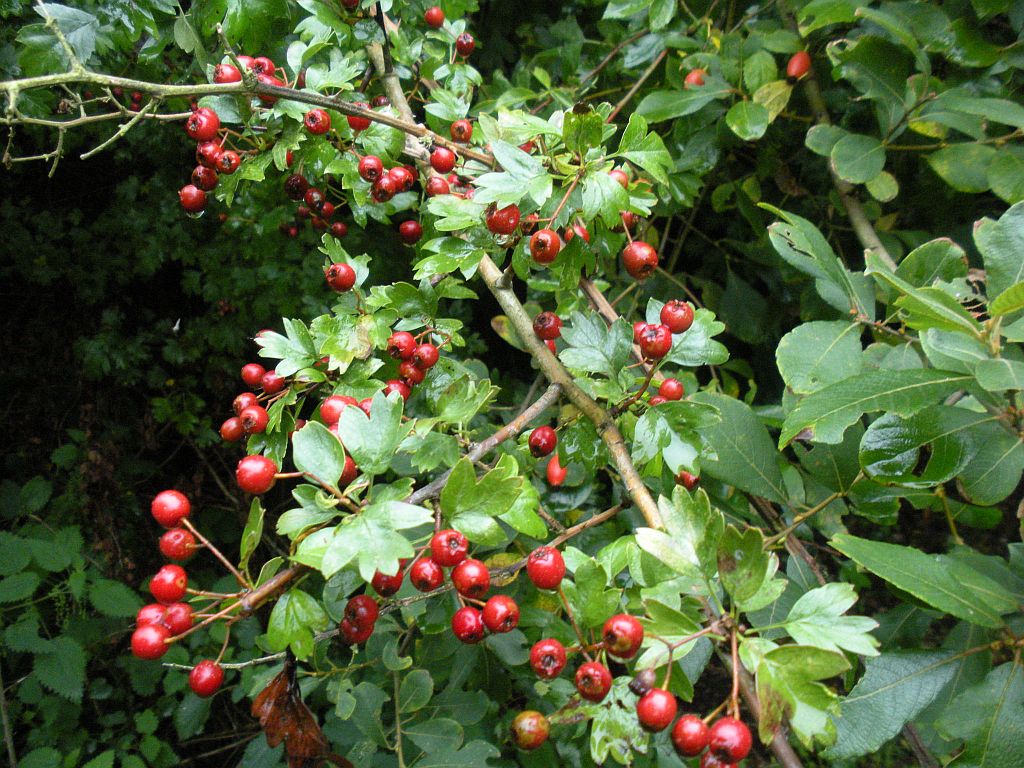
hedgerows are full of ripening berries with Hawthorn haws, Rose hips,
Sloes, Blackberries and Elderberries. However make sure that you pick your Blackberries before September 29th St Michaelmas Day . It was once believed that on the feast of St. Michael, the devil spat on the blackberries (or worse!) and it was therefore very unwise to pick and eat the fruit after September 29th. According to the old tale, when St. Michael cast Satan from Heaven, the devil landed on earth in a patch of brambles and he returns every year to spit on the plant that tortured him, breathing his foul breath over it and trampling it.
The leaves of the trees are just starting to change to the reds and golds of Autumn and Winter as bird migrants start to appear.
When is the first day of autumn?
It depends on whether you are referring to the astronomical or meteorological autumn.
We often talk about it beginning to feel like autumn when the nights start to draw in and temperatures start feeling cooler.
There are two separate dates which could be said to mark the start of autumn in calendars. One is defined by the Earth's axis and orbit around the sun and the second is a fixed date which is used by meteorologists for consistent spacing and lengths of the seasons.
Meteorological season
The meteorological autumn begins on the 1st of September and ends on 30th of November .
The meteorological seasons consists of splitting the seasons into four periods made up of three months each. These seasons are split to coincide with our Gregorian calendar making it easier for meteorological observing and forecasting to compare seasonal and monthly statistics. By the meteorological calendar, the first day of autumn is the 1 September.
The seasons are defined as Spring (March, April, May), Summer (June, July, August), Autumn (September, October, November) and Winter (December, January, February).
Astronomical season
This astronomical autumn began on the 22nd September and ends on the 21st December .
The astronomical calendar determines the seasons due to the 23.5 degree tilt of the Earth's rotational axis in relation to its orbit around the sun. Both equinoxes and solstices are related to the Earth's orbit around the sun.
Earth's axis and seasons
Solstices and equinoxes are considered to be the astronomical transition points between the seasons and mark key stages in the astronomical cycle of the earth. In a year there are two equinoxes (spring and autumn) and two solstices (summer and winter). The dates of the Equinox and Solstice aren't fixed due to the Earth's elliptical orbit of the sun. The Earth's orbit around the sun means that in early January, the sun is closest (known as perihelion) and in early July it is most distant (aphelion).
On the autumn equinox, day and night are of roughly equal length and the nights will become increasingly longer than the days until the spring equinox when the pattern is reversed.
It also marks the time of year when the northern hemisphere begins to tilt away from the sun resulting in less direct sunlight and consequently the cooling temperatures.
Birds
Keep an eye
out for Jays.
These birds are more noticeable at this time of the year as they stash
acorns away for the winter by burying them in the ground. Gathering Swallows & Martins herald the beginning of the great intercontinental shift as northern breeding birds head south.
Insects
Insect numbers decline massively as adults of many species die to leave the caterpillars or pupae to survive the winter; however certain insects are more noticeable at this time of year.
Around the time of the harvest in August onwards the Craneflies (or Daddy-long-legs) appear in their greatest numbers. September really wouldn.t be the same without one of these clumsy charecters hanging around your porch light.On cold autumn mornings you suddenly realise how many spiders there are! Take an early morning walk and spot spider webs outlined in dew on hedgerows, in meadows and even on house windows and car wing mirrors. Spider silk is truly amazing
Other Wildlife
Squirells become more noticeable again hunting for and hiding acorns for the winter.
Plants
& Trees
By September the Horse-Chestnut trees (conker trees) have been showing signs of the changing season for several weeks,
already with their large palmate leaves browning at the edges like they have passed too near to a naked flame.
The Horse-Chestnut also yields up its seeds this month in the form of conkers which drop to the ground in their spiky green cases.
Other tree species such as Ash, Beech and Sweet Chestnut are also turning with tinges of yellow, orange and light green tinges.
Ivy is one of the few late flowering plants and the nectar forms an important food sources for bees and wasps. There are seven different wasp species in Britain. Common and German wasps seemingly suddenly appear in September but this is because their pattern of obtaining food has changed. Their summer past time of killing insects to feed to the larvae in the nest has come to an end (the larvae provide a sweet saliva in return). This is because their queen has now stopped laying eggs and the food incentive has gone. As a result they then move onto other sweet substitutes, such as the sugars of fallen fruit or the jam in your picnic sandwiches. Unfortunately it is now that wasps, with their ability to sting and not die, become particularly unpopular in the garden.
It was once believed that on the feast of St. Michael, the devil spat on the blackberries (or worse!) and it was therefore very unwise to pick and eat the fruit after September 29th. According to the old tale, when St. Michael cast Satan from Heaven, the devil landed on earth in a patch of brambles and he returns every year to spit on the plant that tortured him, breathing his foul breath over it and trampling it.
Many plants have or are setting seeds. Rosebay willow-herb plants are sending out fluffy seed umbrella like structures to carry the seed by the wind to a new location.
Fungi can be found throughout the year but a damp September and October will give rise to a multitude of fruiting bodies yielding billions of spores to spread the species far and wide.